Nestled on a plateau in Yogyakarta, Indonesia, the Ratu Boko Temple offers a unique archaeological and historical experience, unlike the typical temple complexes found in Southeast Asia.
Often referred to as a temple, Ratu Boko is more accurately an ancient palace complex that showcases the grandeur and sophistication of the Ancient Mataram Kingdom.
This majestic site provides not only a window into the past civilization’s architectural achievements but also breathtaking views of the surrounding landscape, including Prambanan and the Merapi Volcano.
Here’s a detailed exploration of Ratu Boko Temple, highlighting its historical significance, architectural features, and the allure it holds for visitors today.
Historical Background
Ratu Boko is believed to have been built during the 8th century, around the same time as the nearby Prambanan temple complex.
It is named after King Boko, a legendary king mentioned in local folklore, though the site’s true origins and purpose are still subjects of scholarly research.
The complex served as a fortified palace, which is evident from the remnants of gates, walls, and moats that suggest it was designed for security and residential purposes.
Ratu Boko is associated with the Sailendra dynasty, which was known for its prolific temple-building activities and its patronage of Mahayana Buddhism, although the site includes elements of Hinduism, indicating the syncretic nature of the kingdom’s culture.
Architectural Features
The Ratu Boko complex spans over 16 hectares and stands more than 190 meters above the sea level, offering stunning panoramic views.
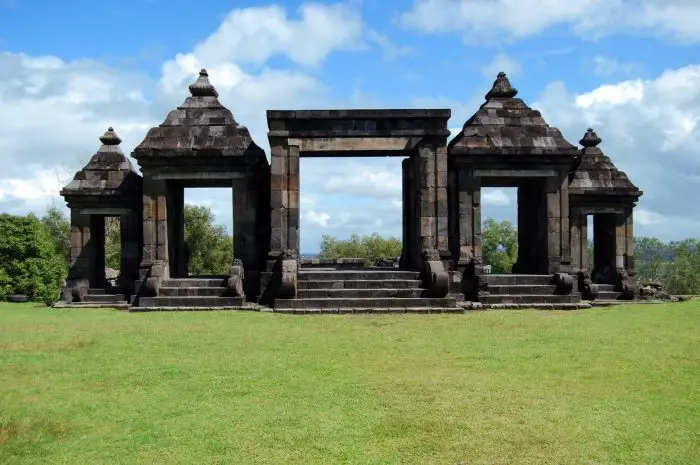
Its main gates are an impressive feature, with two large limestone platforms that are adorned with carvings and staircases leading up to a ceremonial gateway known as the Paduraksa. This structure symbolizes the entrance to a sacred space.
Inside the complex, visitors can explore several significant structures:
- The Crematorium: A circular platform believed to be used for cremation ceremonies, highlighting the site’s ceremonial importance.
- The Audience Hall: A raised rectangular area which likely served as a location for the king to receive guests or hold court.
- The Pool Complex: Includes a bathing pool, which showcases the advanced water management system of the time and the importance of water in spiritual and royal ceremonies.
- Pendopo: A pavilion used for resting and enjoying the views of the surrounding valley and volcanoes.
Buddhist Stupa and Cave: Situated at the edge of the site, suggesting that the complex also served religious purposes.
Cultural and Spiritual Significance
Ratu Boko Temple is not only a historical site but also a place of cultural and spiritual significance. It is a testament to the architectural genius and the cosmopolitan nature of the Ancient Mataram Kingdom, which was capable of integrating various cultural influences.
The site is used for various Javanese rituals and ceremonies, especially during the full moon, and is a place of pilgrimage for those practicing meditation and seeking spiritual calm.
Visiting Ratu Boko Temple
For tourists, Ratu Boko offers a quieter, more contemplative experience compared to the more crowded Prambanan or Borobudur temples.
The best times to visit are during early morning or late afternoon when the sunlight casts a golden glow on the ruins, and the temperature is cooler.
The sunset from Ratu Boko is particularly famous, providing a mesmerizing view as the sun sets behind Prambanan and the Merapi Volcano.
Conclusion
Ratu Boko Temple remains one of Yogyakarta’s hidden gems, offering a unique blend of history, architecture and natural beauty.
These Things to do in Jogja provide insight into the lives of the Javanese royal family and the spiritual practices of the time, making it a must-visit for those interested in archaeology, history and architecture.
The serene atmosphere combined with the spectacular panorama makes Ratu Boko an unforgettable part of every visit to Yogyakarta.